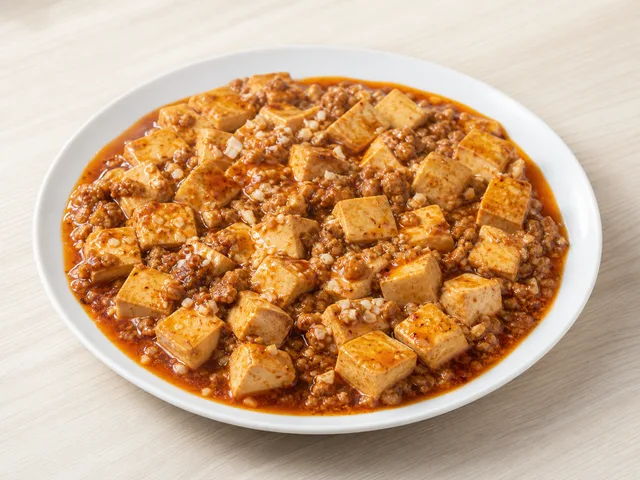
麻婆豆腐
Mapo Tofu / Mápó Dòufu
35 分钟中等3/3
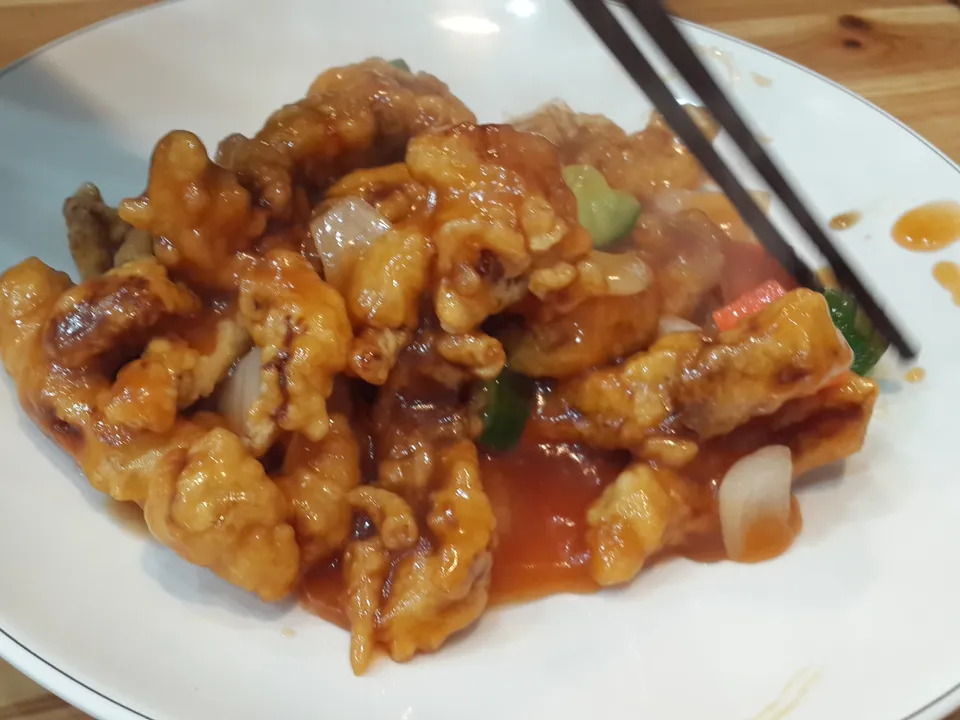
Sweet and Sour Pork / Gūlū Ròu
Known in Cantonese as gūlū yuhk, this dish developed in Guangdong's port cities, where cooks translated local sweet-sour flavor traditions for international diners. The best versions are not buried in sauce: the pork stays crisp, the glaze is lively rather than candy-sweet, and fruit or bell pepper brings freshness. It became one of the world's most recognizable Cantonese dishes.
公制与美制用量分别记录,切换时不会自动换算。
猪肩肉
Pork shoulder / Zhū Jiānròu
菠萝
Fresh pineapple / Bōluó
海外平替: Use canned pineapple packed in juice, drained well, when fresh pineapple is out of season.
彩椒
Bell pepper / Cǎijiāo
玉米淀粉
Cornstarch / Yùmǐ Diànfěn
米醋
Rice vinegar / Mǐcù
海外平替: Use apple cider vinegar for a similarly bright acidity; avoid strongly flavored balsamic vinegar.
番茄酱
Ketchup / Fānqié Jiàng
生抽
Light soy sauce / Shēngchōu
食用油
Neutral frying oil / Shíyòngyóu
按普通家庭厨房的锅具和火力整理。
Cut the pork into 2.5 cm pieces. Season with soy sauce and a pinch of salt, then rest for 15 minutes while you prepare the vegetables and glaze.
Toss the pork with cornstarch until each piece is dry and evenly coated. Shake off loose starch so it does not burn in the oil.
Heat 5 cm of oil in a heavy pot to 180°C or 350°F. Fry without crowding for 3 to 4 minutes, then drain on a rack to preserve the crust.
In a wide skillet, simmer vinegar, ketchup, sugar, soy sauce, and 2 tablespoons water until glossy. Add bell pepper and pineapple for 1 minute.
Add the hot pork and toss only until every piece is lightly coated. Transfer immediately so the crust stays crisp.
按相近菜型、核心食材和用餐场景为你挑选。